
Cardboard and paper recycling for businesses
Loose or baled cardboard and office paper collected for recycling. Clean card is a traded material, so it shouldn’t be filling your general waste bin.
- One point of contactEvery stream, every collector, one number to call when something needs sorting.
- Matched, not bundledEach type of waste goes to the collector and outlet that suits it best.
- Paperwork in placeWaste transfer notes for every stream, so your duty of care is covered.
- Ready for Simpler RecyclingDry recycling, food and general waste kept apart, the way the law now expects.
Cardboard is the bulkiest waste most shops, warehouses and manufacturers produce. Even flattened, it fills a general waste bin fast, and every lift of that bin costs money. Taken out and collected on its own, the same card becomes a raw material that paper mills buy.
Recycle Gemini arranges cardboard and paper recycling for businesses of every size across the North West, from a single 1,100-litre bin behind a shop to baled collections from a distribution centre. We look at how much you produce and how much space you have, recommend loose collection or a baler, and set up the collector, the schedule and the waste transfer notes.
What goes in your cardboard and paper collection
- Corrugated cardboard boxes, flattened
- Thin card packaging, such as product boxes and sleeves
- Cardboard tubes and cores
- Cardboard dividers and edge protectors
- Brown paper and kraft packing paper
- Paper bags
- Office and printer paper
- Envelopes, including windowed ones
- Newspapers and magazines
- Leaflets, brochures and catalogues
- Sticky notes and notepads
Keep these out
- Greasy pizza boxes and food-soiled card (general waste)
- Wet, soaked cardboard (general waste, so keep card covered)
- Waxed or plastic-coated boxes, such as some produce boxes (general waste)
- Coffee cups and paper cups (general waste or a cup collection)
- Drinks cartons (dry mixed recycling)
- Polystyrene, bubble wrap and plastic strapping (plastic recycling)
- Confidential documents (confidential waste shredding)
Bins and collections
Collection options for cardboard
We size the containers to your space and what you produce, and set the collection frequency to match.
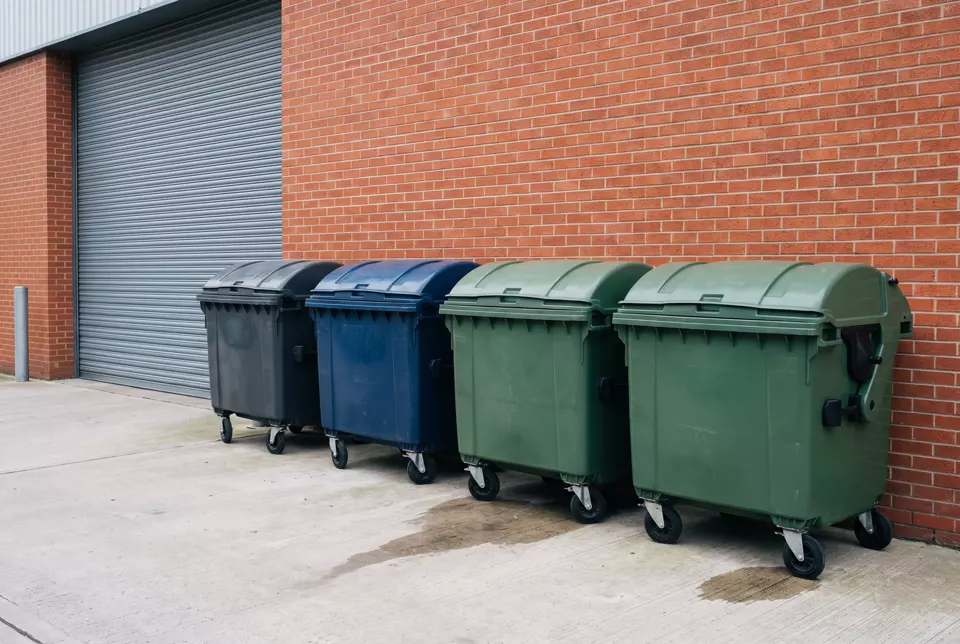
1,100-litre cardboard bins
The standard choice for shops, offices and restaurants. Flatten boxes before they go in and the same bin holds far more.
Cardboard cages
A steel cage suits large, flattened boxes that won’t fit through a bin lid, and makes it obvious to staff where card goes.
Balers and baled collections
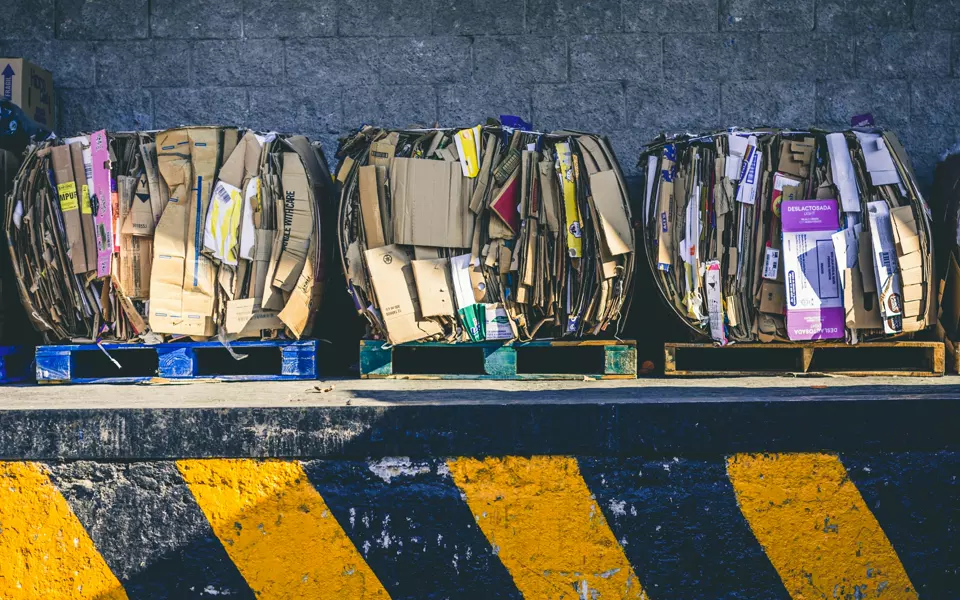
If you produce card in volume, a baler presses it into dense bales that take up a fraction of the space. Bales are stacked and collected when there is a load, and baled card is the form most likely to earn a rebate.
Compactors and roll-on roll-off containers
For large retail and distribution sites, a compactor or a roll-on roll-off container holds a lot of loose card between collections.
Why it matters
Why cardboard is worth separating
Cardboard and paper go to mills to be made into new card and paper, and clean, dry card is a traded commodity. That changes the sums. Loose card in a general waste bin costs you collection and disposal, including Landfill Tax or a gate fee. Separated, it costs less to collect, and baled card in volume can earn a rebate instead of a charge, depending on the market price at the time.
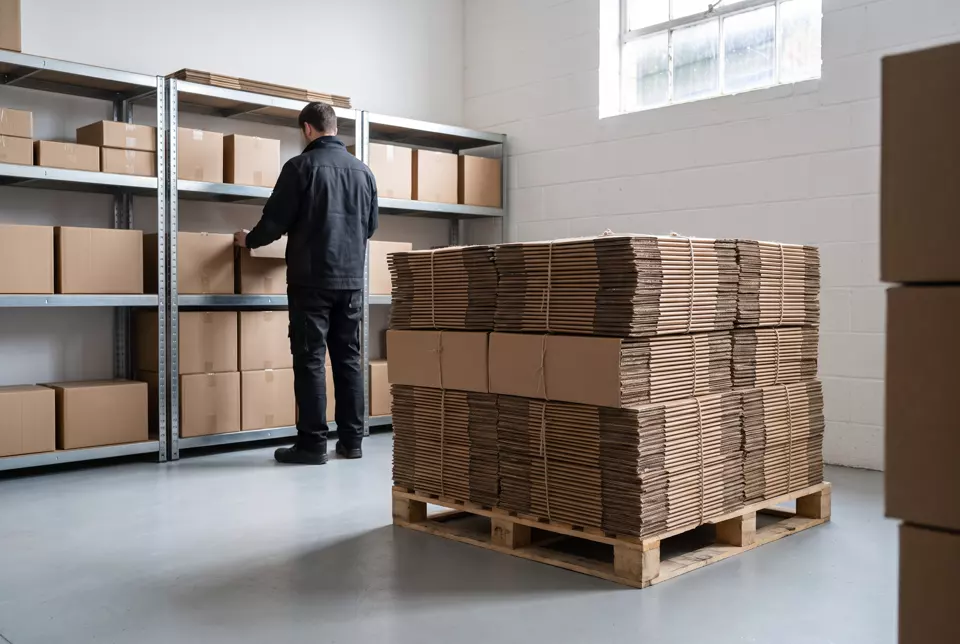
It is also a legal point. Under Simpler Recycling, paper and card is one of the dry recyclable streams that workplaces in England must keep out of general waste, and by default it should be collected separately from plastic, metal and glass. A dedicated cardboard and paper collection meets that rule cleanly. Baling brings practical gains too: a tidier yard and stockroom, fewer bin lifts, and less time spent breaking down boxes.
How it works
From one conversation to every bin sorted
No site visit needed to get started. Most businesses can tell us what they need in ten minutes, and we take it from there.
Tell us what you throw away
What your site produces, roughly how much, where the bins can go, and what you have in place now.
We match each stream
We find the right registered collector and the right recycling or treatment outlet for every type of waste.
Bins and dates set up
The right containers for your space, emptied as often as you actually need, with the paperwork in place.
One contact from then on
Extra lift, a missed collection or a new stream to add? You come to us, and we deal with it.
Related services
Often set up alongside cardboard and paper
-
Commercial waste collection
Scheduled collections of your general (residual) waste, in the right bins for your site and at the right frequency, with the paperwork in place. Find out more -
Dry mixed recycling
Cans, plastic bottles, pots and cartons in one bin, with paper and card alongside where the rules allow, taken to a licensed recycling facility for sorting. Find out more -
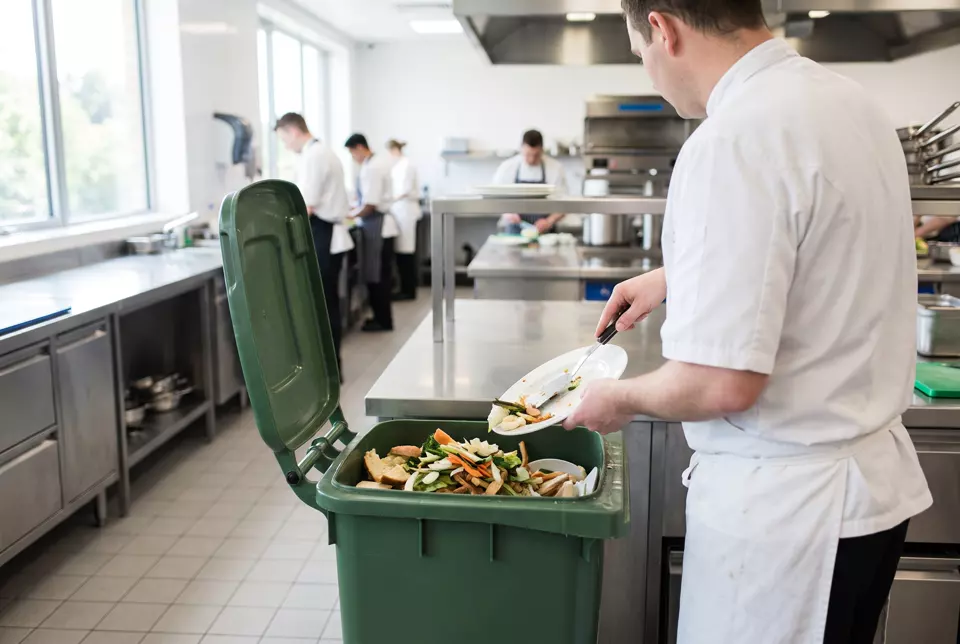
Food waste collection
Sealed food waste bins and caddies for kitchens, canteens and food businesses, collected and sent for anaerobic digestion or composting. Find out more
How often will my cardboard be collected?
As often as you fill it. A shop might need a 1,100-litre bin emptied every week, while a site with a baler might only book a collection when enough bales are ready. We set the frequency from what you produce and adjust it for busy times such as the run-up to Christmas, so card doesn’t pile up beside the bins or end up in general waste.
Do we need a cardboard baler?
Not always. A baler makes sense when you produce enough card to fill several large bins a week, have some floor space near where boxes are opened, and want fewer collections. Staff need training to use one safely. Smaller sites are usually better off with bins or a cage. We can talk you through the options, including buying, leasing or renting a baler, and arrange the baled collections.
Can cardboard and office paper go in the same bin?
Yes. Paper and card count as one recycling stream under Simpler Recycling, and they are usually collected together. Keep both clean and dry, and away from food, plastic and glass. If you produce a lot of white office paper, collecting it on its own can be worth more, because it is a higher grade than mixed card. We will tell you whether your volumes make that worthwhile.
Can shredded paper go in with the cardboard?
Usually not loose. Shredded paper is hard to handle in a bin of card and blows around at the recycling site. Ask us first, because some collectors take it bagged. If the paper was confidential, it is better sent through a confidential waste service, so it is destroyed securely from start to finish.
Can we be paid for our recycling?
Sometimes. Materials such as baled cardboard, clean plastic film and metals are traded commodities, so if you produce them in volume and keep them clean and separate, they can earn a rebate instead of costing you money. What they are worth moves with the market. We will tell you honestly whether your volumes are likely to make it worthwhile.
Cardboard and paper recycling across the North West
We set up cardboard and paper recycling for businesses in Wigan and the towns around it. Pick your area for local details.
- WiganOur home borough
- Leigh6 miles from Wigan town centre
- Skelmersdale6 miles from Wigan town centre
- Chorley7 miles from Wigan town centre
- St Helens8 miles from Wigan town centre
- Bolton9 miles from Wigan town centre
- Warrington11 miles from Wigan town centre
- Bury14 miles from Wigan town centre
- Salford15 miles from Wigan town centre
- Preston15 miles from Wigan town centre
- Manchester17 miles from Wigan town centre
- Liverpool18 miles from Wigan town centre
No-obligation quote
Get a quote for cardboard and paper recycling
Tell us what you throw away and where your site is. We will come back with a clear proposal for each stream, or a few questions if we need them. No obligation.
- Got a current contract?Mention your renewal date. Many waste contracts roll over automatically unless you give notice in time.