
Food waste collection for businesses
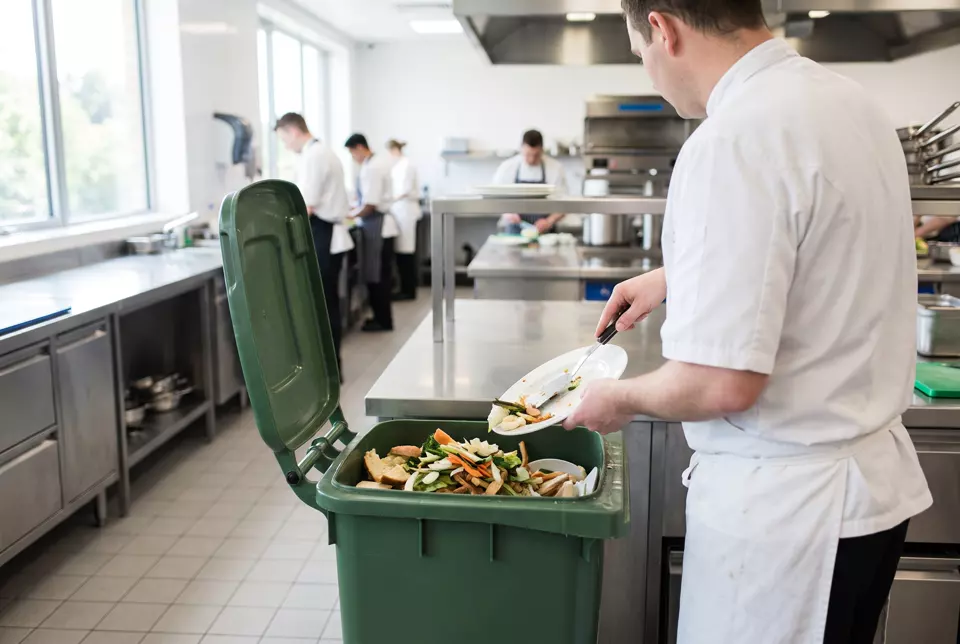
Caddies and sealed food waste bins for kitchens, canteens, care homes and offices, collected and sent for anaerobic digestion or composting. A legal requirement for most workplaces in England.
- One point of contactEvery stream, every collector, one number to call when something needs sorting.
- Matched, not bundledEach type of waste goes to the collector and outlet that suits it best.
- Paperwork in placeWaste transfer notes for every stream, so your duty of care is covered.
- Ready for Simpler RecyclingDry recycling, food and general waste kept apart, the way the law now expects.
Food waste is heavy, wet and quick to smell, which makes it a poor fit for a general waste bin and unpleasant to store. Kept separate in a sealed bin, it is cleaner to handle, and it can be turned into energy and fertiliser instead of being landfilled or burned.
Recycle Gemini sets up food waste collections for restaurants, cafes, pubs, hotels, schools, care homes, offices and food manufacturers across the North West. We work out how much you produce, choose caddies for the kitchen and outdoor bins for collection, set a frequency that keeps smells and pests under control, and arrange a registered collector and a suitable treatment site.
What goes in your food waste bin
- Plate scrapings and leftovers from staff and customer meals
- Preparation waste, such as peelings, onion skins and trimmings
- Fruit and vegetables, including cores and skins
- Raw and cooked meat and fish, including bones
- Dairy products, eggs and eggshells
- Bread, pasta, rice and cakes
- Tea bags and coffee grounds
- Out-of-date food, taken out of its packaging
- Caddy liners, including compostable liners
Keep these out of the food bin
- Packaging of any kind, including ‘compostable’ or ‘biodegradable’ cups and containers (general waste or recycling)
- Used cooking oil in quantity (used cooking oil collection, and never down the drain)
- Cutlery, plates and broken glass (general waste)
- Disposable gloves and wipes (general waste)
- Garden waste such as grass and hedge cuttings (garden waste collection)
Bins and collections
Caddies and bins for food waste
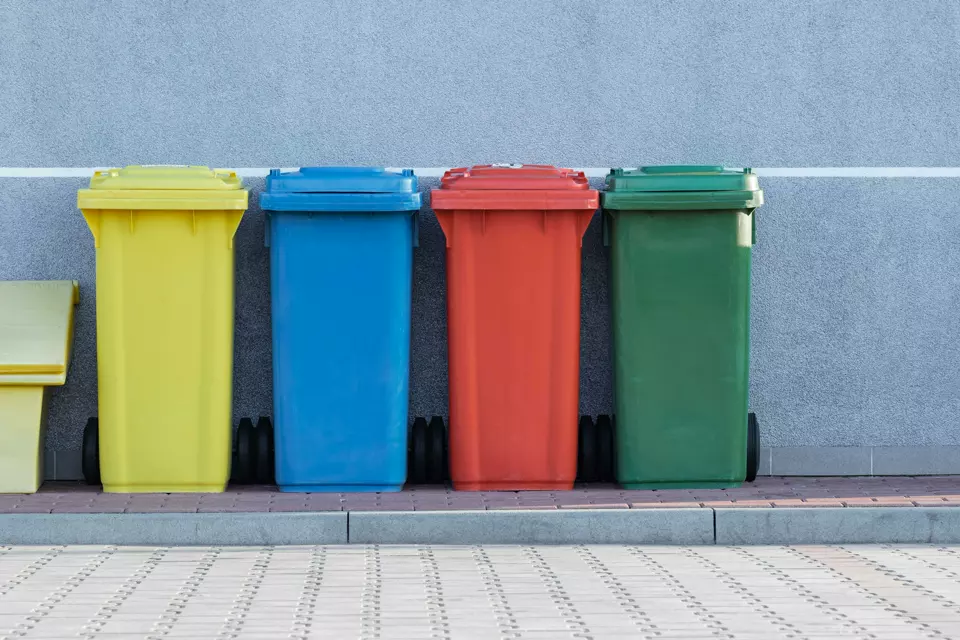
We size the containers to your space and what you produce, and set the collection frequency to match.
Kitchen caddies
Small lidded caddies for prep areas, servery points and staff kitchens. Lined, emptied into the outdoor bin, and easy to keep clean.
140 and 240-litre food bins
The usual outdoor food waste bin. Kept small on purpose, because food is heavy and a full bin still has to be moved safely.
Larger containers for food production
Food manufacturers and processors with big volumes may need larger sealed containers, or tanks for liquid food waste.
Packaged food collections
Out-of-date or damaged stock still in its packaging can go to facilities that separate food from packaging, so staff don’t have to unwrap it by hand.
Why it matters
Why food waste needs its own bin
Under Simpler Recycling, workplaces in England must separate food waste from other waste before collection. That applies even if you don’t serve food or have a kitchen, and no matter how little you produce: the tea bags and lunch scraps in the staff room count. Businesses with 10 or more full-time equivalent employees have had to comply since 31 March 2025, and micro-firms with fewer than 10 have until 31 March 2027. On-site composting is allowed as an alternative to collection.
There is a cost case too. Food is heavy, and in a general waste bin it adds weight and makes everything around it wet and dirty, including recyclables that should have gone elsewhere. Collected separately, it can go to anaerobic digestion, where it is broken down to produce biogas for energy and digestate used as fertiliser on farmland. Taking food out of general waste often lets you shrink that bin or empty it less often.
How it works
From one conversation to every bin sorted
No site visit needed to get started. Most businesses can tell us what they need in ten minutes, and we take it from there.
Tell us what you throw away
What your site produces, roughly how much, where the bins can go, and what you have in place now.
We match each stream
We find the right registered collector and the right recycling or treatment outlet for every type of waste.
Bins and dates set up
The right containers for your space, emptied as often as you actually need, with the paperwork in place.
One contact from then on
Extra lift, a missed collection or a new stream to add? You come to us, and we deal with it.
Related services
Often set up alongside food waste
-
Commercial waste collection
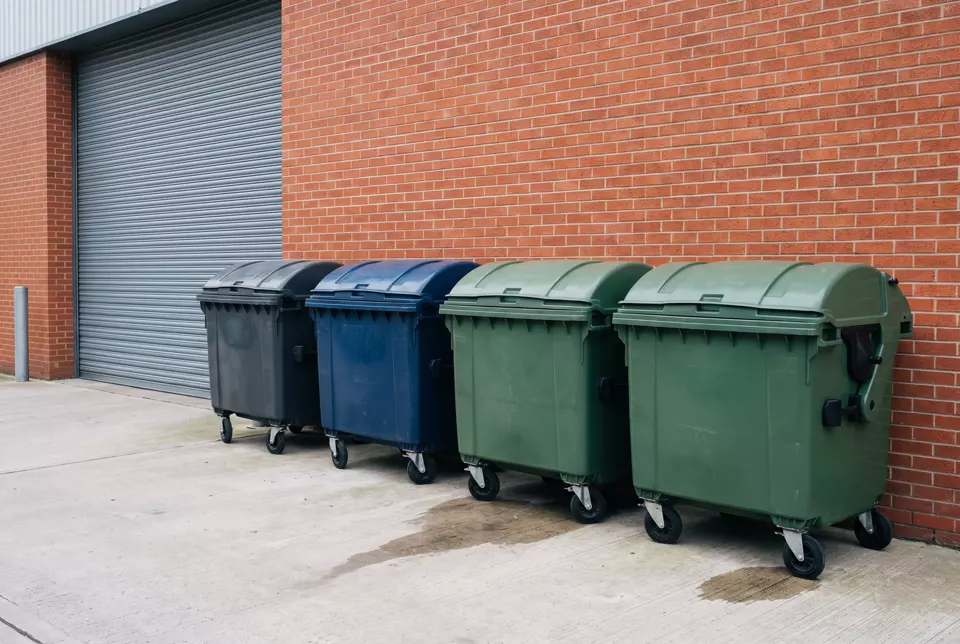
Scheduled collections of your general (residual) waste, in the right bins for your site and at the right frequency, with the paperwork in place. Find out more -
Dry mixed recycling
Cans, plastic bottles, pots and cartons in one bin, with paper and card alongside where the rules allow, taken to a licensed recycling facility for sorting. Find out more -
Cardboard and paper recycling
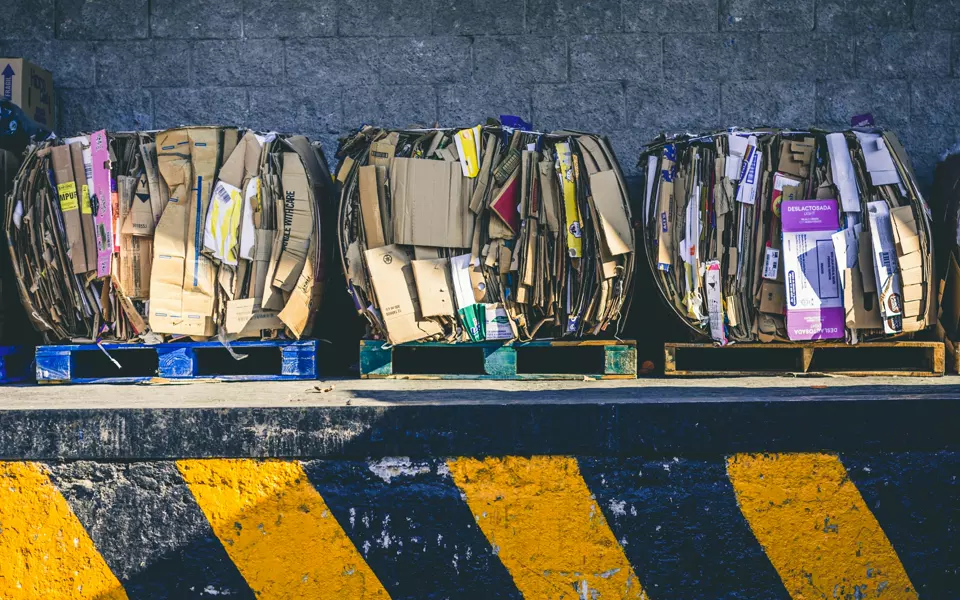
Loose or baled cardboard and office paper collected for recycling. Clean, baled card has a value, so it should cost you less than general waste. Find out more
We don’t have a kitchen. Do we still need a food waste bin?
Yes, if you are a workplace in England covered by Simpler Recycling. Government guidance says food waste must be collected even if the workplace doesn’t serve food or have a kitchen, and no matter how little there is. Staff shouldn’t be asked to take it home. For a small office, a caddy in the staff area and a small outdoor bin is often all it takes.
How often should food waste be collected?
Government guidance recommends weekly or fortnightly collections to keep pests and smells down, and advises against storing food waste for more than two weeks. Busy kitchens usually need collections more often than that. We set the frequency around how much you produce, the size of your bins and the time of year, because warm weather makes smells worse.
Can compostable packaging go in the food bin?
No. Government guidance says packaging labelled ‘compostable’ or ‘biodegradable’ can’t be recycled with food waste, so compostable cups, cutlery and takeaway boxes stay out of the food bin. Caddy liners are the exception: liners, including compostable ones, can go in. If you are not sure about an item, leave it out and ask us.
What happens to our food waste after it’s collected?
It goes to a licensed treatment site, usually anaerobic digestion or composting. In anaerobic digestion, bacteria break the food down in sealed tanks without air. That produces biogas, which is used to generate electricity and heat, and digestate, a fertiliser spread on farmland. We arrange collections to suitable sites, and the waste transfer note records what the waste is and who is taking it.
Do we have to separate our recycling by law?
In England, yes for most workplaces. Under Simpler Recycling, businesses and other non-household premises must keep dry recyclables, food waste and general waste separate and have them collected separately. Larger workplaces had to comply first, and micro-firms with fewer than ten employees have a later deadline. Our Simpler Recycling guide sets out what it means in practice.
Food waste collection across the North West
We set up food waste collection for businesses in Wigan and the towns around it. Pick your area for local details.
- WiganOur home borough
- Leigh6 miles from Wigan town centre
- Skelmersdale6 miles from Wigan town centre
- Chorley7 miles from Wigan town centre
- St Helens8 miles from Wigan town centre
- Bolton9 miles from Wigan town centre
- Warrington11 miles from Wigan town centre
- Bury14 miles from Wigan town centre
- Salford15 miles from Wigan town centre
- Preston15 miles from Wigan town centre
- Manchester17 miles from Wigan town centre
- Liverpool18 miles from Wigan town centre
No-obligation quote
Get a quote for food waste collection
Tell us what you throw away and where your site is. We will come back with a clear proposal for each stream, or a few questions if we need them. No obligation.
- Got a current contract?Mention your renewal date. Many waste contracts roll over automatically unless you give notice in time.