
Commercial waste collection for North West businesses
General waste collections set up around your site: the right bins, the right frequency and the paperwork in place. Plus a plan to make that bin smaller.
- One point of contactEvery stream, every collector, one number to call when something needs sorting.
- Matched, not bundledEach type of waste goes to the collector and outlet that suits it best.
- Paperwork in placeWaste transfer notes for every stream, so your duty of care is covered.
- Ready for Simpler RecyclingDry recycling, food and general waste kept apart, the way the law now expects.
General waste, also called residual waste, is whatever is left once your recycling and food waste have been taken out. Every business has some. The real questions are how much, and whether you are paying to throw away things that could be going somewhere cheaper.
Recycle Gemini sets up general waste collections for offices, shops, pubs, care homes, schools and industrial sites across Wigan and the North West. We look at what your site actually produces, arrange a registered collector, choose bins that fit your yard or bin store, and set a schedule that matches how quickly they fill. You deal with one contact, and the waste transfer notes are in place from the first collection.
What goes in your general waste bin
- Crisp packets and sweet wrappers
- Used tissues, paper towels and napkins
- Greasy or food-soiled packaging
- Dirty plastic film and food wrappers
- Takeaway coffee cups, unless you have a cup collection
- Polystyrene food trays and cups
- Broken crockery and drinking glasses, wrapped
- Blister packs and mixed-material packaging
- Disposable gloves, aprons and wipes
- Worn-out cloths, mop heads and workwear
- Floor sweepings and dust
- Fully extinguished cigarette ends
Keep these out of general waste
- Cardboard and paper (cardboard and paper recycling)
- Food waste (separate food waste bin)
- Clean cans, plastic bottles and pots (dry mixed recycling)
- Glass bottles and jars (glass recycling)
- Batteries, fluorescent tubes and electrical items (WEEE collection)
- Oils, paints, solvents and chemicals (specialist hazardous waste collection)
- Rubble, soil and plasterboard (skip or specialist collection)
- Confidential papers (confidential waste shredding)
Bins and collections
Bins and containers we can arrange
We size the containers to your space and what you produce, and set the collection frequency to match.
240 and 360-litre wheeled bins
Two-wheeled bins for small offices, shops and cafes with modest volumes. Easy to move and they fit where space is tight.
660 and 1,100-litre bins
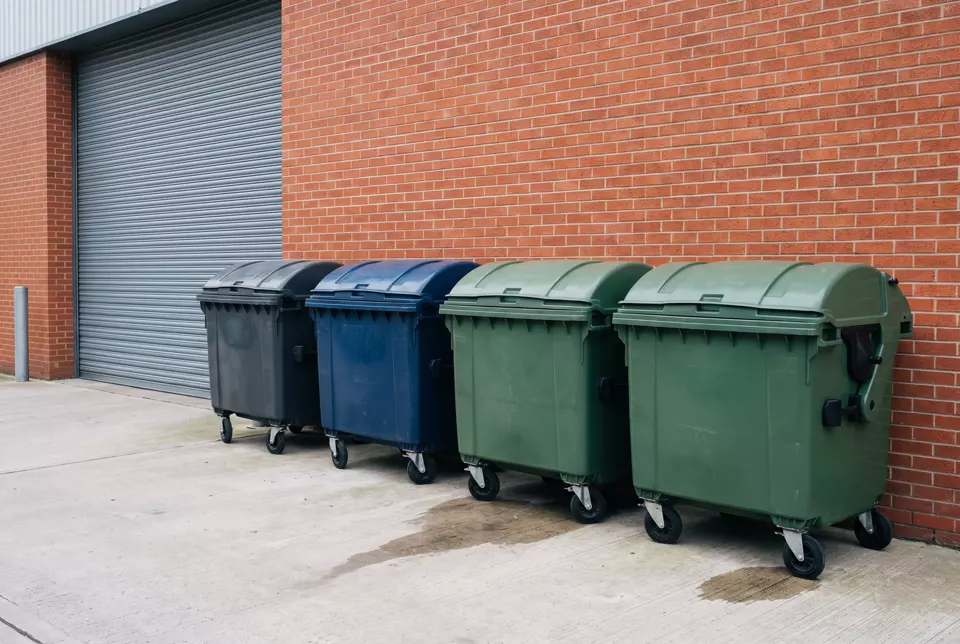
Four-wheeled containers, the standard choice for most commercial sites. A lockable lid stops passers-by filling your bin with their rubbish.
Compactors and roll-on roll-off containers
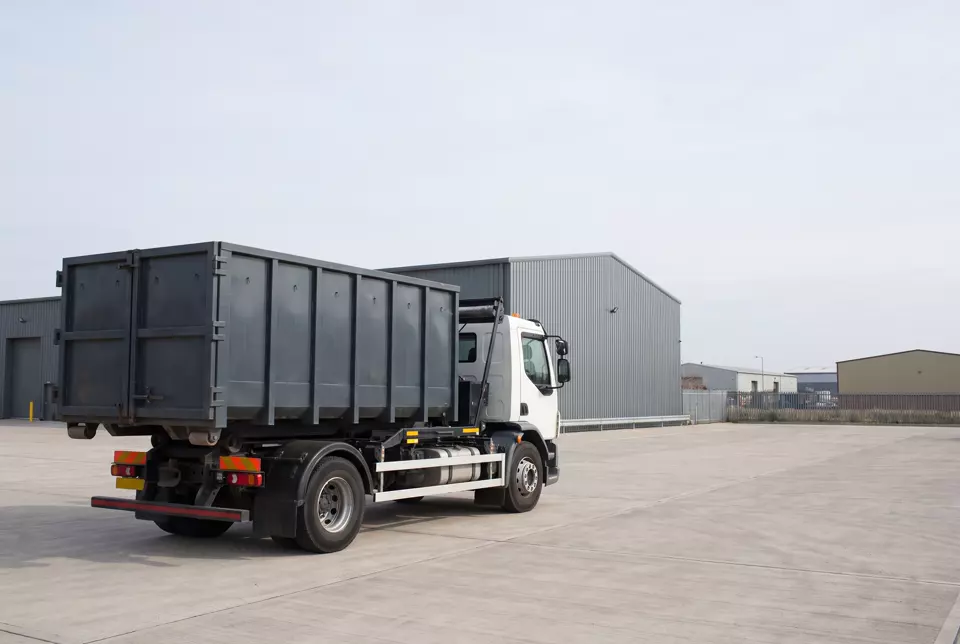
For sites with large volumes, a static compactor or a roll-on roll-off container holds far more between collections, so there are fewer of them.
Trade sacks
For premises with no room for a bin, such as some high-street shops. Sacks are put out and collected on agreed days.
Why it matters
Why it pays to make your general waste bin smaller
General waste is usually the most expensive stream to get rid of. It typically goes either to landfill, where Landfill Tax is charged on every tonne, or to an energy-from-waste plant that charges its own gate fee. Clean recyclables have somewhere better to go, and some, such as cardboard, metals and plastic film, have a market value. Every bag of recycling that ends up in the general bin is money spent on bin space and disposal that it never needed.
There is also the law. Under Simpler Recycling, workplaces in England must keep dry recyclables, food waste and general waste apart before collection. The rules applied from 31 March 2025 to businesses with 10 or more full-time equivalent employees, and micro-firms have until 31 March 2027. Your duty of care also means your waste must go to someone authorised to take it, covered by a waste transfer note. When we set up your general waste, we look at your recycling and food waste at the same time, so the whole site is covered.
How it works
From one conversation to every bin sorted
No site visit needed to get started. Most businesses can tell us what they need in ten minutes, and we take it from there.
Tell us what you throw away
What your site produces, roughly how much, where the bins can go, and what you have in place now.
We match each stream
We find the right registered collector and the right recycling or treatment outlet for every type of waste.
Bins and dates set up
The right containers for your space, emptied as often as you actually need, with the paperwork in place.
One contact from then on
Extra lift, a missed collection or a new stream to add? You come to us, and we deal with it.
Related services
Often set up alongside general waste
-
Dry mixed recycling
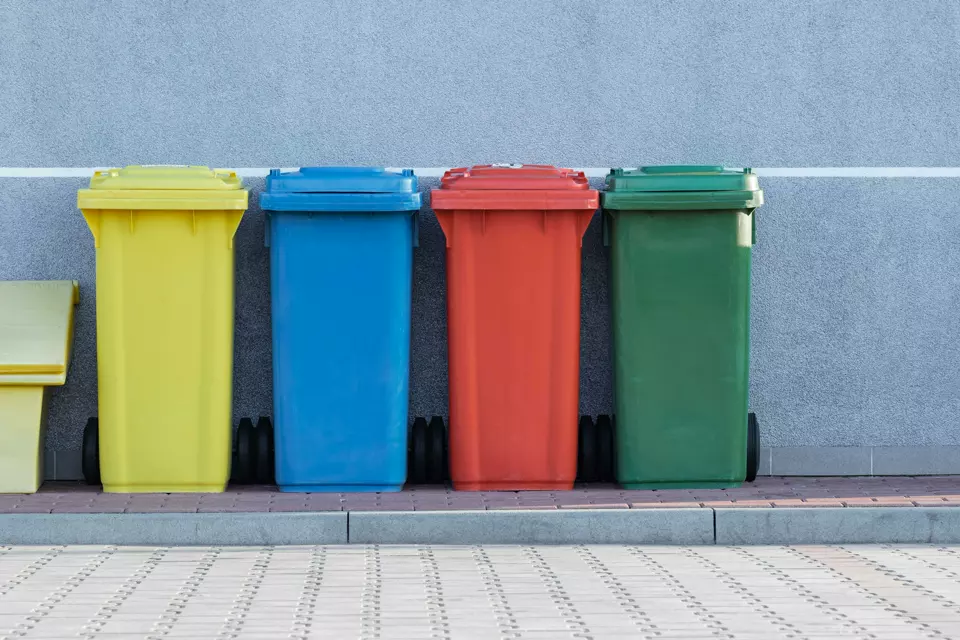
Cans, plastic bottles, pots and cartons in one bin, with paper and card alongside where the rules allow, taken to a licensed recycling facility for sorting. Find out more -
Food waste collection
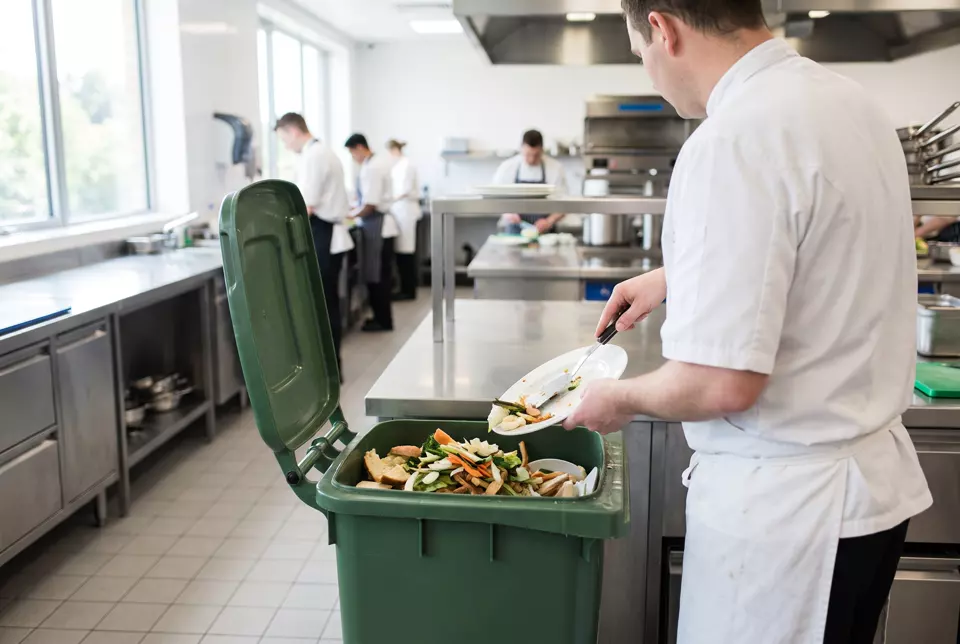
Sealed food waste bins and caddies for kitchens, canteens and food businesses, collected and sent for anaerobic digestion or composting. Find out more -
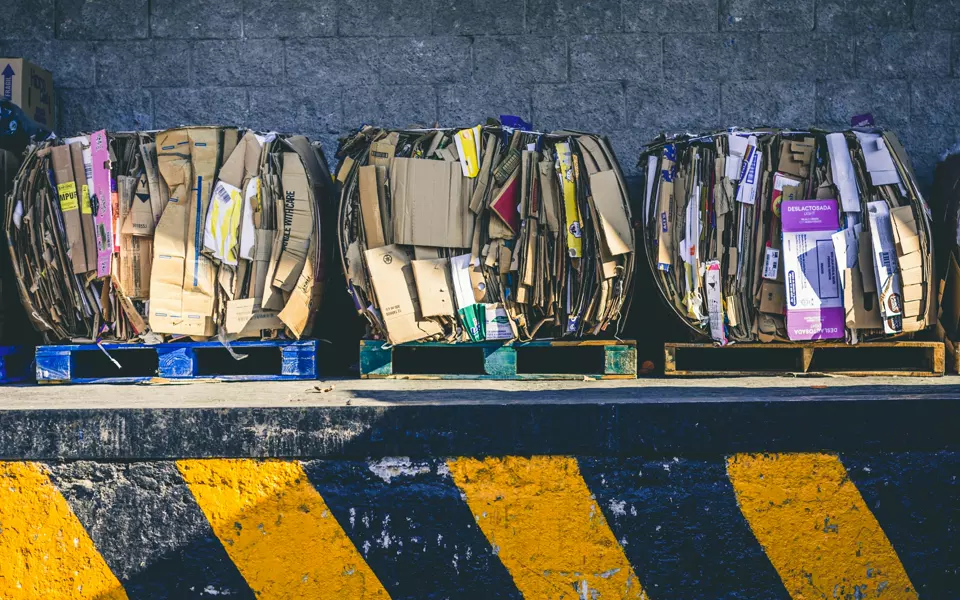
Cardboard and paper recycling
Loose or baled cardboard and office paper collected for recycling. Clean, baled card has a value, so it should cost you less than general waste. Find out more
What size bin does my business need?
It depends on how much you produce, how often it is collected and how much space you have. A small office might manage with one 240-litre bin, while a busy restaurant or warehouse may need several 1,100-litre bins. We ask what you throw away in a typical week and check your bin area and access, then suggest the size and frequency that avoid both overflowing bins and paying to empty half-empty ones.
Can I put my business waste in my household bin?
No. Waste from a business is commercial waste, even if you work from home or run a small shop, and your duty of care says it must go to someone authorised to take it, with a waste transfer note. A household bin gives you neither. Some councils run a separate trade waste service, or we can arrange collections through a registered commercial collector instead.
What happens to general waste after it’s collected?
It goes to a licensed facility. Depending on the collector and the area, that is usually an energy-from-waste plant, where it is burned to generate electricity, or a landfill site. Some facilities pull out more recyclables first. When we arrange your collection we can tell you where your waste is going, and the waste transfer note records what the waste is and who is taking it.
Can you stop other people using our bins?
In most cases, yes. Larger bins can be fitted with lockable lids, often a gravity lock that opens by itself when the collection vehicle tips the bin, so nobody needs a key. That keeps out passers-by and neighbouring businesses who would otherwise fill your bin, and stops you paying to empty their rubbish. A bin store or lockable enclosure helps too.
How much does commercial waste collection cost?
It depends on the type of waste, how much you produce, the bins you need and how often they are emptied. General waste usually costs the most to get rid of, while clean, separated materials such as cardboard, metals and plastic film cost less and can sometimes earn a rebate. Tell us what you produce and we will give you a clear quote with no obligation.
We already have a waste contract. Can we still switch?
Usually, yes, but check your current agreement first. Many waste contracts renew automatically unless you give notice by a set date, sometimes months before the end of the term. Send us a copy or tell us the dates and we will help you plan the switch so there is no gap in collections.
What paperwork do I need for my business waste?
Every transfer of non-hazardous waste needs a waste transfer note describing the waste, and you must keep them for at least two years. Hazardous waste needs a consignment note instead, kept for three years. When we set up your collections we make sure the right notes are in place for each stream.
How often will our bins be collected?
As often as your site needs. Busy food and glass streams might need emptying several times a week, while cardboard or confidential waste might only need a collection every few weeks. We size the bins and set the frequency around what you actually produce, so you are not paying to empty half-full bins.
Commercial waste collection across the North West
We set up commercial waste collection for businesses in Wigan and the towns around it. Pick your area for local details.
- WiganOur home borough
- Leigh6 miles from Wigan town centre
- Skelmersdale6 miles from Wigan town centre
- Chorley7 miles from Wigan town centre
- St Helens8 miles from Wigan town centre
- Bolton9 miles from Wigan town centre
- Warrington11 miles from Wigan town centre
- Bury14 miles from Wigan town centre
- Salford15 miles from Wigan town centre
- Preston15 miles from Wigan town centre
- Manchester17 miles from Wigan town centre
- Liverpool18 miles from Wigan town centre
No-obligation quote
Get a quote for commercial waste collection
Tell us what you throw away and where your site is. We will come back with a clear proposal for each stream, or a few questions if we need them. No obligation.
- Got a current contract?Mention your renewal date. Many waste contracts roll over automatically unless you give notice in time.