The short version
Workplaces in England must keep three types of waste apart and have them collected separately: dry recyclables (glass, metal, plastic, and paper and card), food waste, and general (non-recyclable) waste. It applied to businesses with 10 or more full-time-equivalent employees from 31 March 2025. Micro-firms with fewer than 10 have until 31 March 2027.
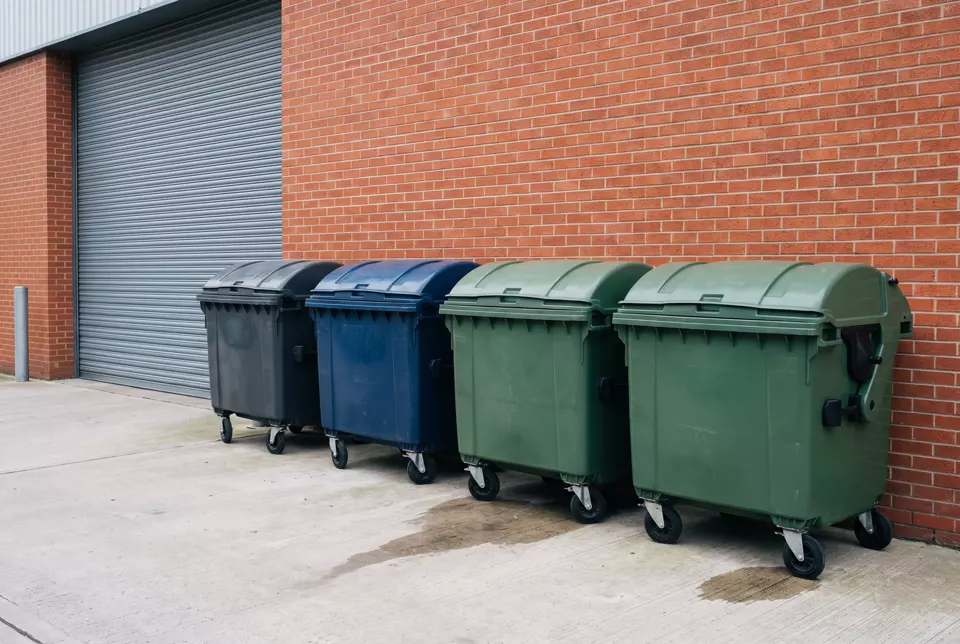
Simpler Recycling is the government’s name for a set of changes that make recycling the same across England, for households and for workplaces. For businesses, the practical effect is simple: one general waste bin for everything is no longer enough. You need the right bins for each stream, and a collector to take them.
Who it applies to
The rules cover businesses and other non-household premises, which the law calls “relevant non-domestic premises”. As well as offices, shops, factories, warehouses, pubs, restaurants and hotels, that includes places such as:
- schools, colleges and universities
- hospitals, care homes and nursing homes
- charities and places of worship
- other workplaces and non-household premises
It is about the waste your workplace produces, not just your packaging or your industry. If staff eat at work, you produce food waste, even if there is no kitchen.
Key dates
| Date | Who | What |
|---|---|---|
| 31 March 2025 | Businesses and relevant non-domestic premises with 10 or more full-time-equivalent employees | Separate dry recyclables, food waste and general waste for collection |
| 31 March 2027 | Micro-firms with fewer than 10 full-time-equivalent employees | The same rules apply |
Employees are counted as full-time equivalents, as they were on 31 March 2025. Contractors, volunteers and self-employed workers do not count towards the ten.
Plastic film: the law currently says plastic film collections start on 31 March 2027. In July 2026 the government announced it plans to push this back to 1 April 2030, but that change has not been made law yet. We will update this guide when it is.
If you are a micro-firm, there is nothing stopping you setting up separate collections now, and it is often cheaper to do it before everyone else is trying to at the same time.
The three streams
| Stream | What goes in it | Our service |
|---|---|---|
| Dry recyclables | Glass, metal, plastic, and paper and card, clean and empty | Dry mixed recycling, cardboard and paper, glass |
| Food waste | Leftovers, peelings, tea bags, coffee grounds, out-of-date food | Food waste collection |
| General waste | What is left that cannot be recycled | Commercial waste collection |
These are the minimum. Many businesses also produce enough of one material, such as cardboard, plastic film, pallets or metal, to justify its own collection, which can cost less than mixing it in with everything else. Some waste, such as confidential paper and electrical equipment, needs its own route regardless.
Paper and card: the one people get wrong
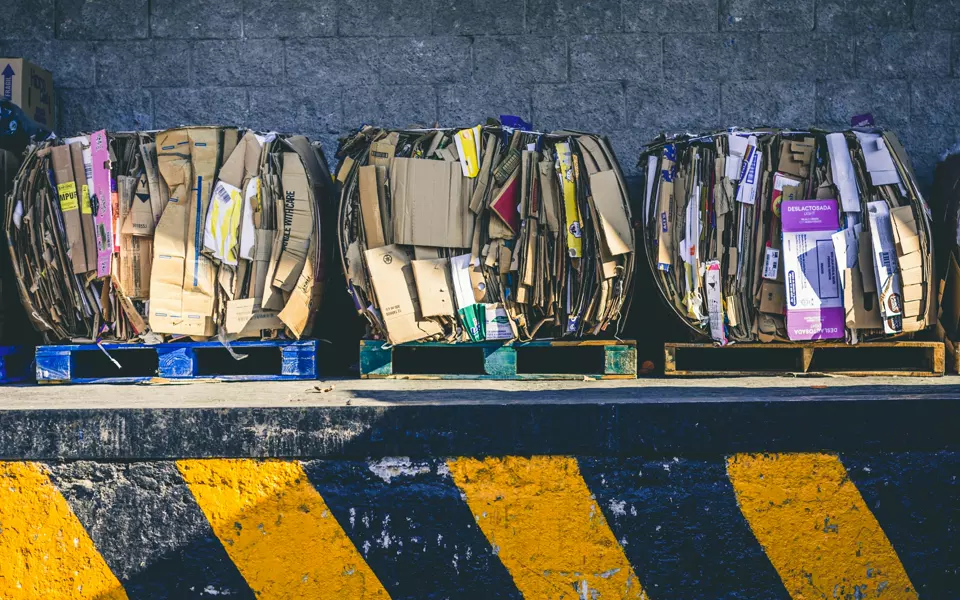
Metal, glass and plastic can be collected together in one bin. Paper and card are different. By default they should be collected separately from the other dry recyclables, because wet or dirty packaging spoils them.
They can share a bin only if the collector has completed a written assessment showing that collecting them separately is not technically or economically practicable, or would not bring a significant environmental benefit. So whether your paper and card can go in with your cans and bottles depends on your collector, not on what is convenient for you. When we set up your dry recycling, we check which applies.
Food waste
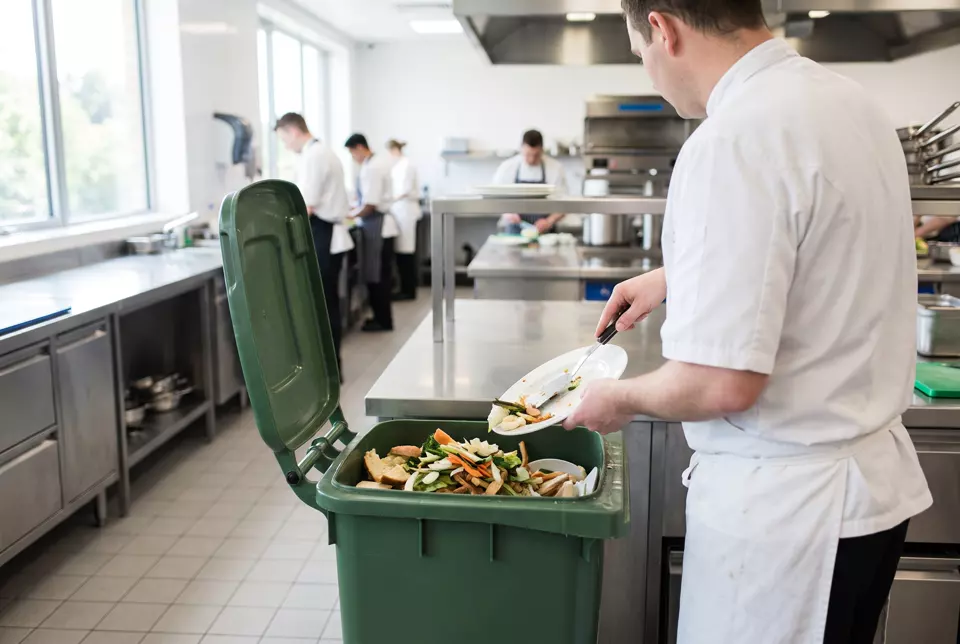
- It must be kept out of general waste, however little you produce.
- Caddy liners are fine, but compostable packaging, cups and cutlery should not go in the food waste bin.
- Food waste should not be stored for more than two weeks before it is collected.
- Composting food waste on site is allowed, if it suits your premises.
For most offices, a small caddy in the staff kitchen emptied into a lidded external bin is enough. Restaurants, canteens and food businesses need bigger bins and more frequent collections. Our food waste page covers the options.
Getting your site ready
- Look at what you throw away. A week of what goes in your bins tells you which streams you produce and roughly how much.
- Choose the bins. Size them to what you produce and the space you have, so they are not overflowing or half empty.
- Put the right bins where waste is made. Recycling separated at the desk, the till or the kitchen stays clean. Recycling picked out of the general bin does not.
- Label everything clearly. Simple signs on each bin cut contamination, and contaminated recycling can be refused or charged extra.
- Arrange the collections and the paperwork. Each stream needs a registered carrier and a waste transfer note, as part of your duty of care.
Does it cost more? Not necessarily. General waste is usually the most expensive stream to get rid of (general waste sent to landfill carries Landfill Tax of £130.75 a tonne from 1 April 2026), so moving material out of it into recycling and food waste collections can offset the extra bins. It depends on your site, which is why we quote stream by stream.
Who enforces it
The Environment Agency regulates Simpler Recycling for workplaces in England. Where a business is not separating its waste, it can be issued with a compliance notice setting out what to fix, and failing to comply with a notice is an offence that can lead to a fine. The simplest way to stay clear of all of that is to have the right bins and collections in place, and the paperwork to show it.
Wales and Scotland
This guide is about England. Wales has had its own workplace recycling rules since 6 April 2024, which go further: six streams must be kept separate, including small electricals and unsold textiles, and food waste must not be sent to sewer. Scotland’s business recycling duties have been in place for longer still. If you have sites in Wales or Scotland, check the rules there separately.
How we can help
Recycle Gemini sets up compliant collections for workplaces across Wigan and the North West. We look at what your site produces, recommend the streams that make sense, arrange the bins and collections through registered collectors, and put the waste transfer notes in place. You get one contact for all of it.
Ask us to look at your site. It costs nothing and there is no obligation.
This guide is general information about the rules in England, not legal advice. For the full government guidance, see Simpler Recycling: workplace recycling in England on gov.uk.