
Industrial stainless steel recycling
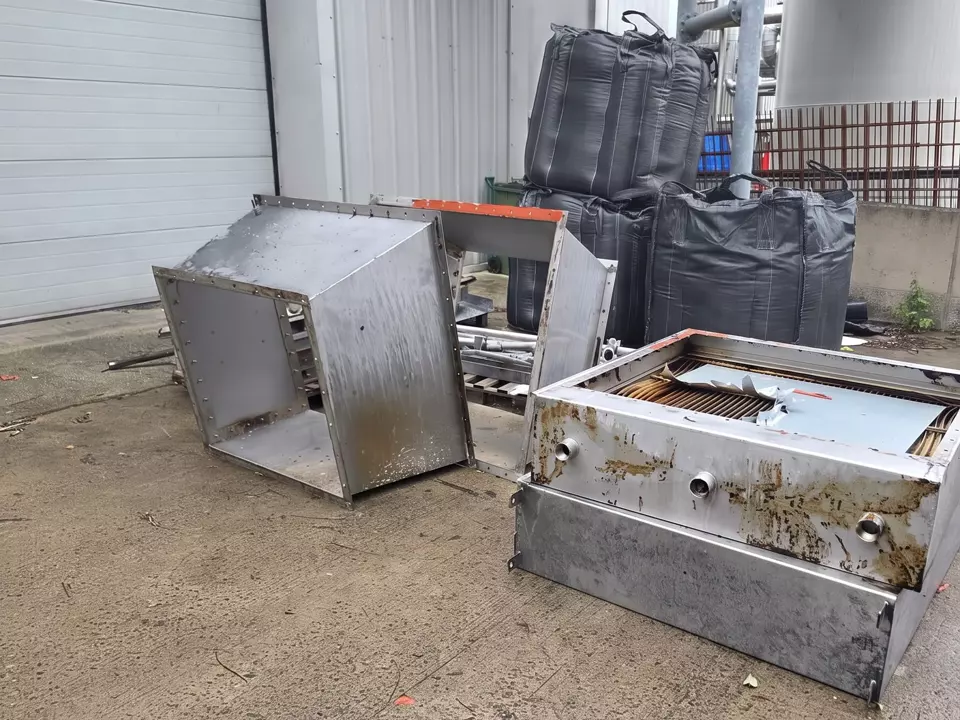
Offcuts, sheet, plate, tube, pipe, process equipment and stainless swarf, kept apart by grade and sold through licensed scrap metal dealers. Stainless carries nickel, and nickel is what the market pays for.
- One point of contactEvery stream, every collector, one number to call when something needs sorting.
- Matched, not bundledEach type of waste goes to the collector and outlet that suits it best.
- Paperwork in placeWaste transfer notes for every stream, so your duty of care is covered.
- Ready for Simpler RecyclingDry recycling, food and general waste kept apart, the way the law now expects.
Stainless steel is often the most valuable steel a fabricator, food or drink plant or process engineer throws away. It isn’t just steel: it carries chromium and, in the common grades, nickel, which is why stainless steel scrap is worth far more than mild steel. Lost in a mixed skip, it can end up priced as ordinary steel.
Recycle Gemini arranges stainless steel recycling for fabricators, sheet metal workers, food, drink and pharmaceutical manufacturers, and engineering and maintenance teams across Wigan and the North West. We find out which grades and forms you produce, help you keep them apart, and arrange collection and sale through licensed scrap metal dealers, with payment by bank transfer and a waste transfer note for each load.
Stainless steel we can arrange to recycle
- Sheet and plate offcuts
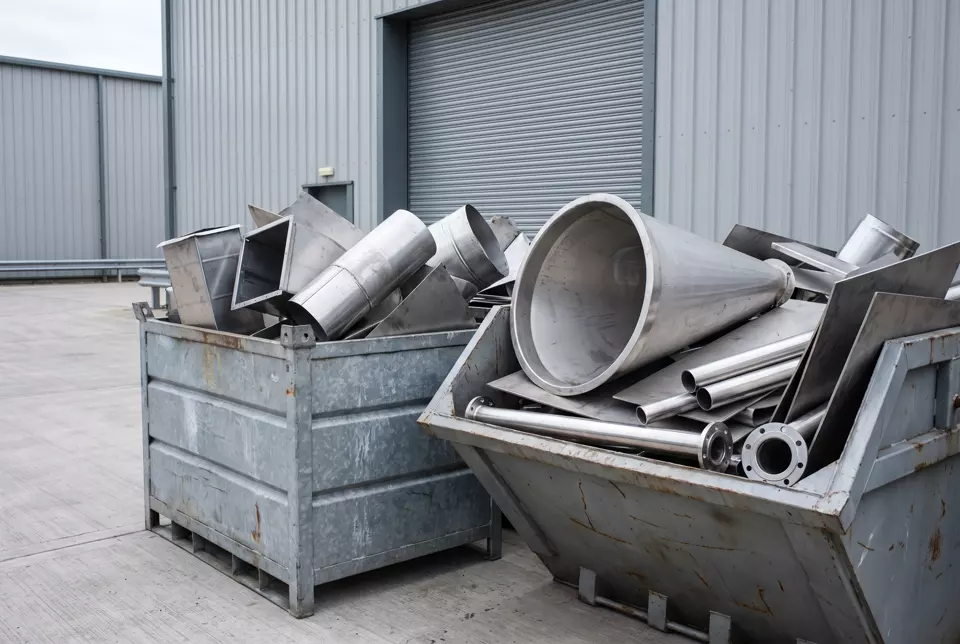
- Fabrication and laser-cutting waste, including skeletons
- Tube, pipe and fittings
- Bar, rod and sections
- Grade 304 solids, kept apart
- Grade 316 solids, kept apart
- Duplex and other special grades, labelled
- Ferritic stainless such as 430, kept separate
- Stainless turnings and swarf, drained
- Redundant tanks, vessels, hoppers and pipework, emptied and cleaned
- Stainless benches, sinks and tables from commercial kitchens
- Stainless fasteners, mesh and wire
Keep these out of your stainless
- Mild steel, galvanised and chrome-plated steel (ferrous scrap, in its own container)
- Tanks, vessels or pipework still holding product, chemicals or oil (empty and clean first, or specialist hazardous waste collection)
- Electrical equipment in stainless casings, such as catering appliances (WEEE collection)
- Lagging and insulation on vessels and pipework (strip first, and use a specialist asbestos contractor if it may contain asbestos)
- Rubber seals, gaskets and plastic parts in quantity (strip them off, or ask us)
- Cutting fluid and grinding sludge (specialist hazardous waste collection)
Bins and collections
Containers for stainless scrap
We size the containers to your space and what you produce, and set the collection frequency to match.
Separate bins or stillages by grade
One container each for 304, 316 and anything else you produce regularly, clearly labelled, so the grades never meet.
Skips for fabrication waste
Open skips for skeletons, offcuts and bulky pieces from fabrication and refits, kept for stainless only.
Lidded swarf bins
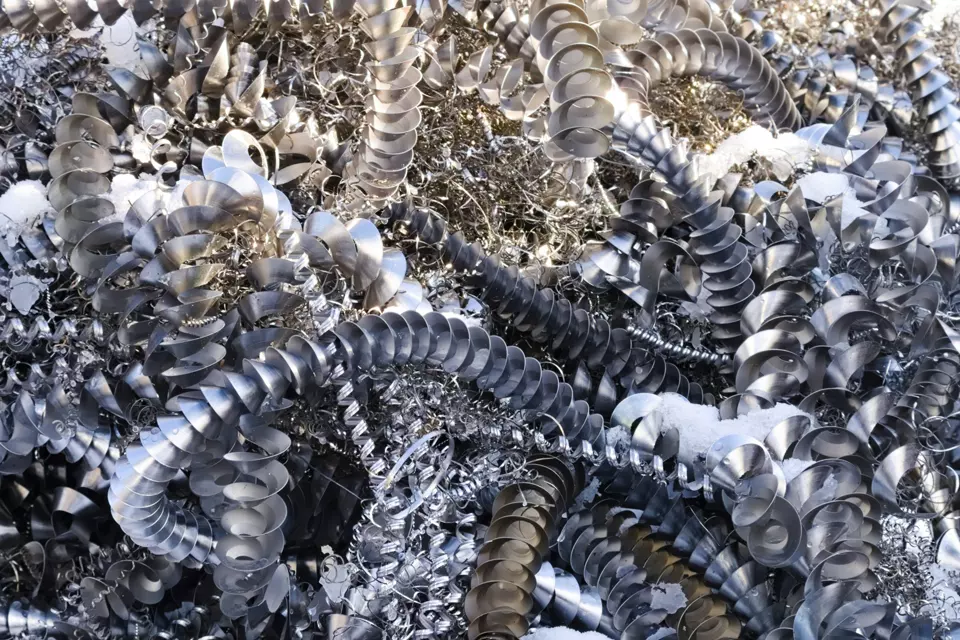
For stainless turnings, a lidded, leak-tight bin keeps them dry and away from mild steel swarf.
Redundant equipment collections
Tanks, vessels and process lines can be collected as a one-off job once they are emptied, cleaned and safely disconnected.
Why it matters
What affects the price of stainless steel scrap
Stainless scrap is priced mainly on the alloying metals in it, nickel above all, so prices move with the nickel market. Grade 304, the standard austenitic grade, contains chromium and nickel. Grade 316 adds molybdenum and carries more nickel, so it is usually worth more, as long as it is kept apart. Ferritic grades such as 430 are based on chromium with little or no nickel, and are worth less. After the grade come separation, contamination, form and quantity: clean, single-grade solids are worth more than mixed or oily turnings, and a full load is easier to price than a bag.
A mixed bin is where the value goes. Once 316 is mixed with 304, it is likely to be priced as 304, and stainless mixed with mild steel can end up priced as mild steel. A magnet is a rough first check. 304 and 316 are austenitic grades and nominally non-magnetic, while ferritic grades such as 430 are magnetic. Cold working and welding can make austenitic stainless slightly magnetic, though, so a magnet can’t confirm a grade. Mill certificates and purchase records help, and dealers can check grades with a handheld analyser.
How it works
From one conversation to every bin sorted
No site visit needed to get started. Most businesses can tell us what they need in ten minutes, and we take it from there.
Tell us what you throw away
What your site produces, roughly how much, where the bins can go, and what you have in place now.
We match each stream
We find the right registered collector and the right recycling or treatment outlet for every type of waste.
Bins and dates set up
The right containers for your space, emptied as often as you actually need, with the paperwork in place.
One contact from then on
Extra lift, a missed collection or a new stream to add? You come to us, and we deal with it.
Related services
Often set up alongside industrial stainless
-
Cable recycling
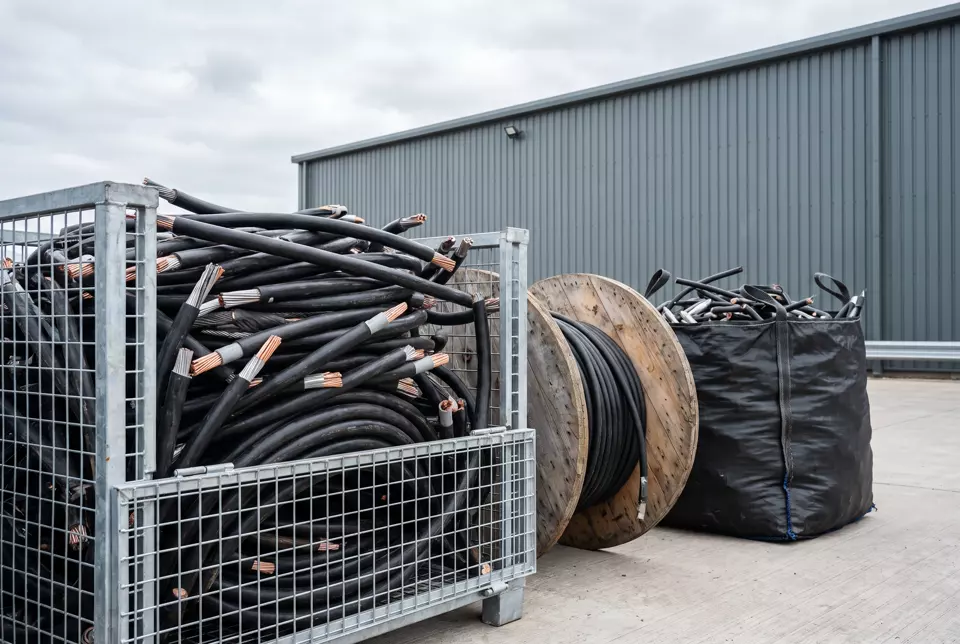
Heavy armoured and power cable, copper and aluminium cable, drum ends and strip-out cable, collected and sent to a licensed scrap metal dealer for its metal value. Find out more -
Swarf recycling
Steel, stainless, aluminium and brass turnings from machining, kept apart by grade and collected in the right bins or skips. Find out more -
Scrap metal recycling
Copper, aluminium, brass, lead and steel scrap collected from your site and sold through licensed dealers, so it earns its value instead of costing you. Find out more
How much is stainless steel scrap worth?
It changes all the time, so we don’t publish a price list. Stainless scrap prices follow the nickel market, and what your load is worth depends on its grade, how well it is separated, how clean it is, whether it is solids or turnings, and how much there is. Tell us what you have and roughly how much, and we will get you a current price from a licensed scrap metal dealer.
What’s the difference between 304 and 316 stainless?
Both are austenitic stainless steels made with chromium and nickel. 316 adds molybdenum and carries more nickel, which gives it better resistance to corrosion, particularly from chlorides. That is why it is chosen where 304 wouldn’t last, such as around harsh cleaning chemicals, and why its scrap is usually worth more. If you work with both, keep them in separate, labelled containers from the start, because they are hard to tell apart by eye.
Why does a magnet stick to some stainless steel?
Because stainless comes in different families. Austenitic grades such as 304 and 316 get their structure from nickel and are nominally non-magnetic. Ferritic grades such as 430, and martensitic and duplex grades, are magnetic. Bending, pressing and welding can also make austenitic stainless slightly magnetic, especially at corners and welds. So a magnet tells you something, but not the grade. Keeping records of what you buy is the surest way to keep grades apart.
Can old process equipment go for scrap?
Yes, once it is safe to move. Tanks, vessels, pipework and frames are often mostly stainless, but they must be emptied and cleaned first. Metal contaminated with hazardous substances can be hazardous waste itself, so anything that held chemicals or oil needs checking. Control panels and other electrics should be removed and dealt with separately, and lagging should be checked for asbestos before anyone disturbs it. Tell us what the equipment held when you ask for a quote.
Do we get paid for our scrap cable, swarf and stainless?
Usually, yes. Clean, separated scrap metal has a market value, so it should earn you money rather than cost you. We arrange collection and sale through licensed scrap metal dealers, and you are paid by bank transfer: paying cash for scrap metal is illegal in England and Wales under the Scrap Metal Dealers Act 2013. What it is worth moves with the metals markets, so it is priced at the time of collection.
Should we keep different metals apart?
Yes, wherever you can. Mixed scrap is priced at the value of its lowest-grade part, so stainless thrown in with mild steel, or copper cable mixed with aluminium, is paid for as the cheaper metal. Separate bins or bags for each metal and grade, kept free of general waste, make the biggest difference to what your scrap is worth.
Stainless steel recycling across the North West
We set up stainless steel recycling for businesses in Wigan and the towns around it. Pick your area for local details.
- WiganOur home borough
- Leigh6 miles from Wigan town centre
- Skelmersdale6 miles from Wigan town centre
- Chorley7 miles from Wigan town centre
- St Helens8 miles from Wigan town centre
- Bolton9 miles from Wigan town centre
- Warrington11 miles from Wigan town centre
- Bury14 miles from Wigan town centre
- Salford15 miles from Wigan town centre
- Preston15 miles from Wigan town centre
- Manchester17 miles from Wigan town centre
- Liverpool18 miles from Wigan town centre
No-obligation quote
Get a quote for stainless steel recycling
Tell us what you throw away and where your site is. We will come back with a clear proposal for each stream, or a few questions if we need them. No obligation.
- Got a current contract?Mention your renewal date. Many waste contracts roll over automatically unless you give notice in time.